Search does not work the same way it did a few years ago.
Earlier, businesses focused on ranking higher on Google. If your page reached the top positions, users clicked through to your website. That model is changing quickly.
Today, people often get answers directly inside Google results, AI Overviews, ChatGPT, Perplexity, and voice assistants. In many cases, they never visit a website at all.
Google now handles more than 5 trillion searches every year. At the same time, over 65% of searches end without a click. In the UAE, AI search adoption has reached 68% in 2026, making it one of the fastest-growing AI-first markets globally.
This shift is changing how businesses earn visibility online.
Customers no longer engage in a linear search path. They evaluate multiple brands across multiple platforms before making purchasing decisions. A shopper might start with Google, proceed with information research via ChatGPT and then conduct fact-checking with reviews or videos.
That is why artificial intelligence search engine optimisation is becoming increasingly important.
Businesses now need content that AI systems can understand, trust, and surface in answers. Traditional SEO still matters, but it no longer covers the full picture.
In this blog, we will explore how AI is changing search behaviour, what modern AI SEO strategies look like, and why businesses in the UAE need to adapt sooner rather than later.
Why Traditional SEO Is No Longer the Full Picture
Traditional SEO still plays an important role in digital visibility. Rankings, backlinks, technical SEO, and content quality continue to matter.
However, search behaviour is changing.
When Google AI Overviews appear, the click-through rate for the first organic result drops significantly. Users often get enough information directly from AI-generated summaries without visiting a website.
This means businesses are competing for attention in a very different environment.
Today, users move between:
- Google AI Overviews
- ChatGPT
- Perplexity
- Voice assistants
- Forums and review sites
- Video platforms
before choosing a business.
The journey is no longer linear.
How Search Behaviour Has Changed
This shift changes the purpose of SEO itself.
Businesses now need to optimise not only for rankings, but also for AI visibility.
That includes:
- Becoming a trusted source
- Structuring content clearly
- Building strong authority signals
- Improving answer visibility
- Creating conversational content
This is why more businesses are investing in AI SEO services and answer engine optimisation strategies.
The goal today is not only to rank. It is to become the source that AI systems choose to reference.
What Is AI SEO, And Why Does It Matter for Your Business?
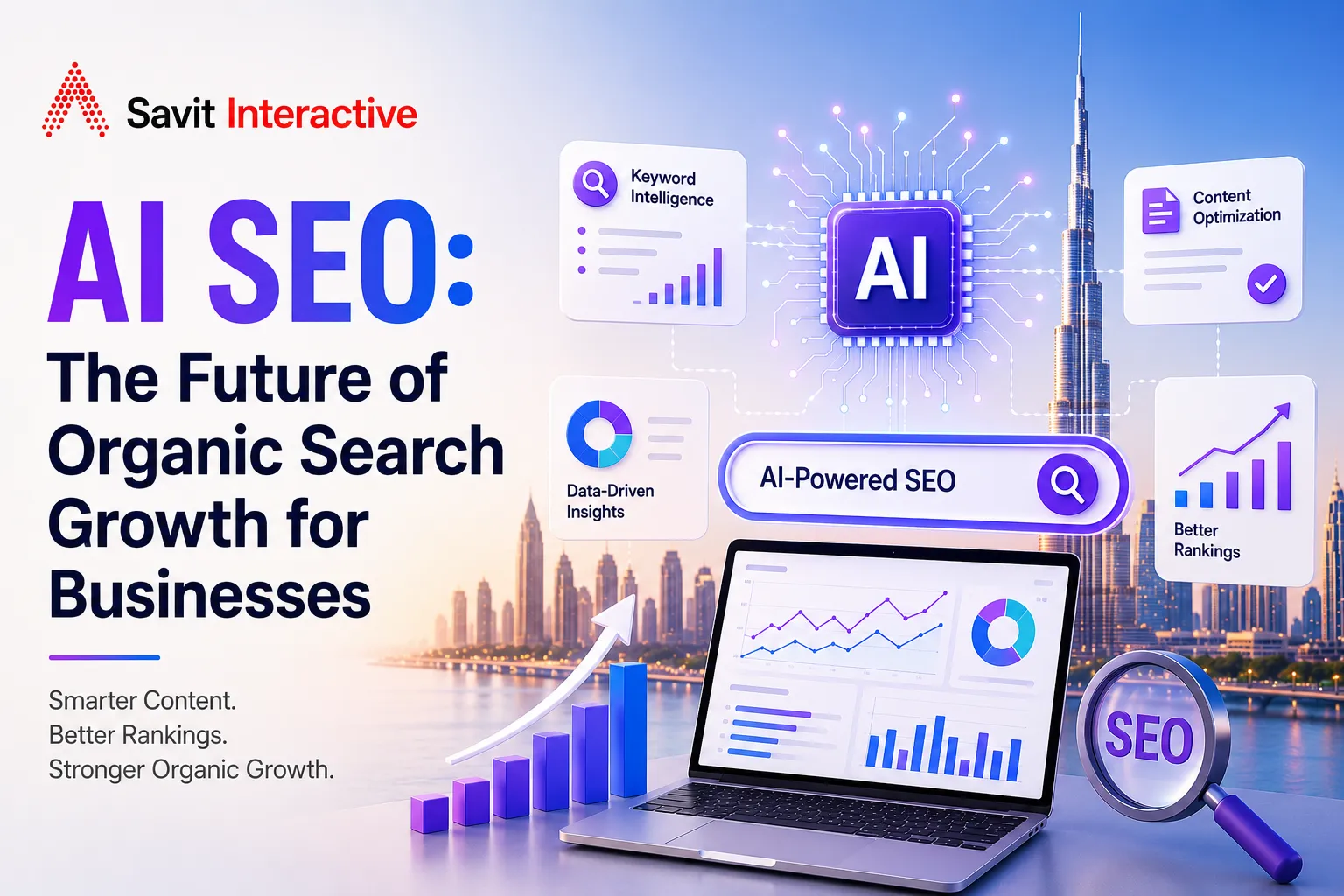
Artificial intelligence search engine optimisation is the process of improving a business’s visibility across AI-driven search platforms.
It helps AI systems understand:
- Who your business is
- What your expertise is
- Which topics you cover
- Whether your content can be trusted
Unlike traditional SEO, AI-driven search focuses less on keyword matching alone.
AI systems evaluate:
- Content structure
- Topic depth
- Authority signals
- Entity relationships
- Trustworthiness
- Context
This is why businesses now combine traditional SEO with newer strategies such as:
|
Strategy |
Main Focus |
|
Traditional SEO |
Ranking webpages in search engines |
|
AI SEO |
Visibility across AI-driven search tools |
|
Answer Engine Optimisation (AEO) |
Winning direct answers and snippets |
| GEO |
Appearing in AI-generated responses |
Businesses using structured AEO frameworks have reported stronger visibility across AI-generated search results.
AI SEO also improves how brands appear in:
- Google AI Overviews
- ChatGPT responses
- Voice search results
- Conversational search tools
- Featured snippets
Importantly, AI SEO does not replace traditional SEO.
Instead, it builds on it.
The businesses that adapt early are more likely to stay visible as search behaviour continues to evolve.
How Is AI Changing the Way People Search in 2026?
The shift towards AI-driven discovery is happening across multiple search behaviours at once.
- The Rise of Zero-Click Search
Over 65% of searches now end without users clicking through to a website.
Instead, users receive answers directly from:
- AI Overviews
- Featured snippets
- Knowledge panels
- Voice assistants
- Conversational AI tools
This means visibility itself has become valuable, even without a click.
Businesses investing in AEO marketing aim to secure these high-visibility answer placements because they influence awareness and trust during early research stages.
Traditional Search vs AI-Led Search
|
Traditional Search |
AI-Led Search |
|
User clicks multiple links |
User receives summarised answers |
|
Rankings drive visibility |
Source credibility drives visibility |
|
Keyword focus |
Context and entity focus |
|
Website traffic is primary metric |
Brand inclusion and citations matter |
AI Overviews Are Reshaping High-Intent Queries
AI Overviews now appear for 58% of informational queries.
This creates a major challenge for businesses.
If your content is not structured clearly enough for AI extraction, your brand may lose both:
- The website visit
- The brand impression itself
Content today needs to become highly answerable.
That includes:
- Clear introductions
- Direct explanations
- Concise summaries
- Structured headings
- FAQ-style formatting
- Easy-to-scan information architecture
These formats improve how AI systems interpret and surface information.
- Voice and Conversational Search Continue to Grow
Voice search creates a winner-takes-most environment.
Unlike traditional search pages showing multiple options, voice assistants often provide only one direct answer. For UAE businesses, this trend is especially important because the market remains strongly mobile-first, with around 78% of searches happening on mobile devices.This makes conversational optimisation increasingly valuable.
Businesses focusing on AI for SEO now create content that mirrors natural language patterns users speak aloud.
For example:
|
Traditional Keyword |
Conversational Query |
|
best CRM software UAE |
Which CRM software is best for small businesses in Dubai? |
|
SEO agency Dubai |
Who offers AI SEO services for UAE businesses? |
Natural phrasing improves compatibility with voice interfaces and conversational AI systems.
- ChatGPT and Perplexity Are Becoming Research PlatformsAI search traffic grew by 527% in just one year.
That growth reflects a major behavioural shift.
Users increasingly rely on tools like ChatGPT, Gemini, and Perplexity to: - Compare providers
- Research industries
- Understand services
- Validate decisions
- Shortlist vendors
This changes how organic visibility works.
Businesses that are not cited or referenced during AI-generated research journeys risk disappearing from consideration long before the final buying decision happens.
For many industries, AI visibility is already becoming as important as traditional rankings.
What Does a Strong AI SEO Strategy Look Like?
Effective AI SEO optimisation combines technical structure, authority building, and content clarity.
The strongest strategies typically include several interconnected layers.
1. Entity Authority Building
AI systems prefer brands they can confidently identify and verify.
This requires strong entity consistency across:
- Websites
- Business profiles
- Social platforms
- Industry directories
- Author pages
- Structured metadata
Entity authority helps AI systems understand:
- Who your business is
- What services you provide
- Which topics you are associated with
- Whether your expertise appears trustworthy
Think of entity signals as a digital reputation map for AI systems.
2. Answer-First Content Architecture
AI systems prioritise content that delivers fast, direct answers.
Strong AI-friendly content usually includes:
- Clear opening summaries
- Short paragraphs
- Structured headings
- FAQ sections
- Bullet points
- Easy-to-parse explanations
Example Structure for AI Readability
Question
↓
Direct Answer
↓
Expanded Context
↓
Supporting Data
↓
Practical Takeaway
This structure improves extraction and citation potential.
Businesses investing in answer engine optimisation increasingly design pages around answer flow rather than keyword density alone.
3. Schema and Structured Data
Structured data acts like a translation layer between your content and AI systems.
Important schema types include:
FAQPage
- HowTo
- Organisation
- Article
- Product
- Speakable
- Review schema
Proper schema implementation helps AI platforms understand content relationships more accurately.
For businesses operating in competitive industries, structured data often improves eligibility for enhanced search features and AI-generated summaries.
4. Strong E-E-A-T Signals
Experience, Expertise, Authoritativeness and Trust are the pillars of modern search performance.
Google is continuing to place more stringent quality filters on thin, mass-produced, low-value AI-generated content.
Businesses that:
- Have actual, organic expertise
- Have real-world experience
- Have authoritative authors
- Have a trustworthy source of information
- Have original insights
are going to continue to get long-term visibility.
This is more relevant in areas like health, finance, law, and real estate, where trust has a greater impact on search.
5. Platform-Specific Optimisation
Every AI platform processes information differently.
|
Platform |
Key Focus Areas |
|
Google AI Overviews |
Structured authority and topical clarity |
|
ChatGPT |
Citation quality and contextual trust |
|
Perplexity |
Source reliability and factual structure |
|
Gemini |
Semantic relationships and authority |
|
Bing Copilot |
Technical clarity and structured relevance |
A strong AI SEO agency strategy adapts content and optimisation priorities according to platform behaviour.
6. AI Search Visibility Monitoring
Traditional analytics tools were not designed for AI-led search visibility.
Businesses now need to monitor:
- AI citations
- Overview appearances
- Brand mentions in AI responses
- Conversational query visibility
- Zero-click exposure trends
Without tracking these signals, it becomes difficult to measure how visible a business truly is across AI-driven discovery journeys.
Is AI SEO Only for Big Brands, Or Can Growing Businesses Benefit Too?
Many businesses still assume that AI SEO services are mainly for large enterprises with massive budgets.
That is not necessarily true.
In many cases, AI-driven search creates new opportunities for smaller and growing businesses.
Traditional search rankings often favour established websites with strong backlink profiles and long domain histories. AI-driven search behaves differently.
AI systems focus heavily on:
- Relevance
- Clarity
- Structure
- Authority
- Topic depth
- Trust signals
It creates a more balanced atmosphere in which a small business can be competitive if its content is organised and really useful.
A small company specialising in one area, with well-written, concise content, can actually beat a large company with low AI readability.
Why Early Adoption Matters
AI search is still evolving.
Businesses that adapt earlier often gain stronger long-term visibility advantages.
This is especially relevant in the UAE, where AI-related business spending has grown rapidly across sectors.
Many SMEs are already investing in:
- AI-driven marketing
- Automation
- Conversational search optimisation
- AI SEO optimisation
- Content restructuring
Being an early adopter allows businesses to cement their authority before other companies begin competing more fiercely.
With continued visibility across AI search experiences, the strength of the signals builds up over a longer time period.
Industries Already Seeing Strong AI SEO Benefits
AI-led search is influencing almost every industry differently.
However, some sectors are already seeing significant changes in customer search behaviour.
| Industry |
AI SEO Opportunity |
|
Real Estate |
Conversational property searches and local intent |
|
Healthcare |
Voice search and trust-focused content |
|
Professional Services |
Authority-based research visibility |
|
E-commerce |
AI-assisted product discovery |
|
Education |
Research-driven conversational queries |
| Hospitality |
Mobile and voice-led travel planning |
For example, a real estate business in Dubai may now appear in AI-generated responses for searches such as:
- “Best areas to buy property in Dubai”
- “Affordable family apartments near Downtown Dubai”
- “Top real estate firms for investors in the UAE”
Likewise, health and professional service providers gain when an AI understands their competencies and presents their content when a user is researching.
AI SEO Helps Businesses Beyond Traffic
One important shift in AI-led search is that visibility itself now carries value.
Earlier, businesses mainly measured SEO success through:
- Website traffic
- Click-through rates
- Rankings
Today, visibility can influence buying decisions even before a website visit happens.
For example, if an AI platform repeatedly references a business during customer research, that brand begins building familiarity and trust.
This changes how businesses think about organic growth.
Modern SEO Goals Now Include:
- AI citation visibility
- Brand mentions
- Conversational search presence
- Topical authority
- Zero-click visibility
- Trust and recognition
This broader visibility strategy is why more businesses are exploring AEO marketing and long-term AI-focused optimisation.
Smaller Businesses Can Move Faster
Large organisations often take longer to adapt because of:
- Internal approval processes
- Complex website structures
- Large content ecosystems
- Slower implementation cycles
- Smaller businesses are usually more agile.
They can:
- Update content faster
- Restructure websites more quickly
- Test conversational content
- Implement schema changes rapidly
- Build focused topic authority
That flexibility can become a competitive advantage in AI-led search environments.
Businesses that move early and build strong authority signals now are more likely to maintain visibility as AI search continues evolving.
AI SEO Is Not the Future. It Is Already Reshaping Search
Organic search is not disappearing. It is becoming more conversational, more AI-driven, and more focused on trusted answers.
The core foundations of SEO still matter.
High-quality content, authority, technical performance, and trust remain essential. However, the way search systems interpret those signals has changed significantly.
Customers now move between:
- Google AI Overviews
- ChatGPT
- Perplexity
- Voice assistants
- Video platforms
- Forums and reviews
before deciding which business deserves their attention.
This means visibility can no longer depend only on traditional rankings.
Businesses need content that AI systems can:
- Understand
- Trust
- Extract
- Reference
- Surface in answers
That is why artificial intelligence search engine optimisation is becoming an important part of long-term digital growth strategies.
At Savit, we help businesses in the UAE and globally improve visibility across the AI-driven search environments shaping modern customer journeys.
As an AI SEO agency, our approach to AI SEO services focuses on measurable visibility and long-term search growth. Every strategy is tailored around how audiences search, which platforms influence decisions, and how brands currently appear across AI-led search experiences.
Whether it involves improving entity authority, structuring content for Google AI Overviews, increasing visibility within ChatGPT and Perplexity responses, or strengthening technical AI readiness, we approach artificial intelligence search engine optimisation as a practical business growth strategy rather than a passing trend.
For businesses looking to stay visible where modern buyers now search, an AI visibility audit can help identify opportunities before competitors move faster.
Get in touch with Savit.