Key Highlights
- Understand how ChatGPT, Perplexity, and Google AI Overviews choose which businesses to mention in AI-generated answers.
- Learn practical strategies to strengthen your AI search engine optimization and improve your online authority.
- Discover how quality content, technical SEO, structured data, and trusted brand mentions influence AI search visibility.
- Explore the key differences between traditional SEO and generative engine optimization, and why businesses need both.
- Use a practical AI search readiness checklist to prepare your website for the next generation of search.
- Find out how Google AI overview optimization and a future-ready SEO strategy can help your business stay visible as AI-powered search continues to evolve.
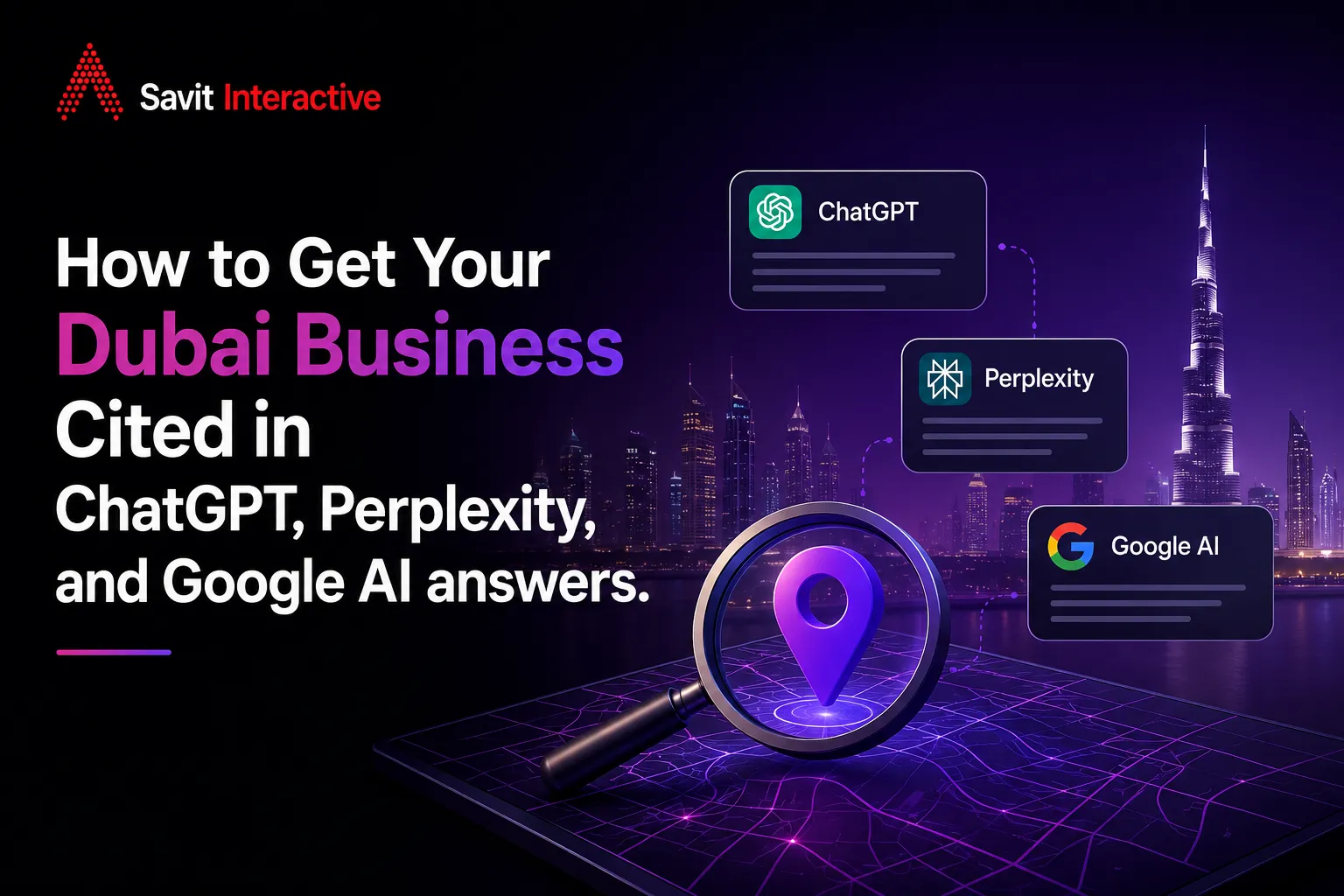
The way people search for information is changing. Instead of scrolling through pages of search results, many users now turn to AI-powered platforms like ChatGPT, Perplexity, and Google AI Overviews to get quick, detailed answers. Whether they’re looking for a service provider, comparing solutions, or researching a business, AI-generated responses are becoming an important part of the customer journey.
This shift means that simply ranking on Google’s first page is no longer the only goal. Businesses also need to improve their chances of being referenced or cited in AI-generated answers, where users often discover trusted brands without having to click through multiple websites. As AI search continues to evolve, adopting artificial intelligence search engine optimization is becoming an important extension of traditional SEO rather than a replacement for it.
This is an advantage as well as a disadvantage for the companies working in Dubai. Companies that produce high-quality, credible content and have a strong online presence will be noticed by artificial intelligence search engines.
In this blog, we’ll explain how AI platforms select the information they present and share practical strategies to help your business improve its visibility across ChatGPT, Perplexity, and Google AI answers.
Why AI Search Is Changing How Customers Discover Businesses
Not long ago, most online journeys started with a Google search followed by a list of blue links. Today, that journey is evolving. AI-powered search platforms are helping users find answers faster by summarising information from multiple trusted sources, reducing the need to visit several websites before making a decision.
In the context of business visibility, this implies that visibility is not simply defined by a company’s search engine ranking. Rather, referencing the company in artificial intelligence answers serves to build credibility.
Here’s what’s changing:
- Users expect direct answers: Platforms such as ChatGPT, Perplexity, and Google AI Overviews give direct answers rather than listing off a bunch of websites.
- Trust matters more than ever: AI systems are more likely to reference businesses with authoritative content, credible sources, and a strong online presence.
- Search intent is taking priority: Rather than matching keywords alone, AI focuses on understanding user questions and delivering the most relevant information.
As a result, businesses need to think beyond traditional SEO. A well-planned AI search engine optimization strategy combines high-quality content, technical best practices, and authority-building efforts to improve the chances of being cited by AI-powered search experiences.
Key takeaway: The future of AI for SEO isn’t just about ranking higher; it’s about becoming a trusted source that AI platforms are confident recommending to users.
How ChatGPT, Perplexity and Google AI Choose Which Businesses to Mention
There is no one-size-fits-all formula for ensuring that your business pops up in responses provided by AI. Websites such as ChatGPT, Perplexity, and Google AI Overviews analyse data from multiple credible sources before providing answers.
Rather than focusing on algorithms, it’s more useful to understand the signals that help establish your business as a credible source.
Here’s what AI platforms typically look for:
- Website authority: Businesses with well-maintained websites, quality backlinks, and established expertise are generally considered more trustworthy.
- Helpful, high-quality content: Content that answers real customer questions, demonstrates expertise, and provides genuine value is more likely to be referenced.
- Structured data: Schema markup and a well-organised website make it easier for search engines and AI systems to understand your business and content.
- Trusted third-party mentions: Citation from reputable websites, magazines, business directories, and other well-known organizations improves your web credibility.
- Consistent business information: Providing similar business information on your website, Google My Business listing, and business directories builds credibility.
- Customer reviews and reputation: Positive reviews from customers improve your business credibility and establish trust.
- Fresh and up-to-date content: Regularly updating your website with current information, insights, and accurate business details signals that your content remains relevant.
The stronger these trust signals are, the greater your chances of being recognised across AI-powered search experiences. That’s why SEO for AI search engines goes beyond keywords; it focuses on building authority, credibility, and consistency across your entire online presence.
Proven Ways to Improve Your Chances of Being Cited by AI Search Engines
1. Publish Helpful, Experience-Based Content
AI-powered search engines do not just recommend content because they match the right keywords in their algorithm. What is recommended is content that answers questions and shows knowledge.
Instead of making content that only promotes your offerings, make content that educates and informs your audience.
For example:
- Answer common customer questions.
- Share industry insights backed by data.
- Publish real case studies and success stories.
- Explain complex topics in a simple way.
The more useful and trustworthy your content is, the stronger your AI search engine optimization efforts become. Over time, this increases the likelihood that your business will be referenced in AI-generated answers.
2. Build Topical Authority, Not Just More Content
Posting dozens of unrelated blogs is not going to turn your business into an authority. AI systems are going to reference sites that always talk about the same thing.
So instead of covering everything, you need to concentrate your efforts on developing content around your area of expertise. Link your related blog posts, guides, FAQs, and services together to showcase your expertise.
Think quality and depth over quantity. This approach strengthens your website’s credibility and supports long-term AI for SEO success.
3. Optimise for Search Intent, Not Just Keywords
Many businesses still create content around keywords alone. However, AI platforms are designed to understand why someone is searching, not just what they’re searching for.
When planning your content, ask yourself:
- What problem is the user trying to solve?
- What information would help them make a decision?
- Does my content answer the query completely?
Creating content around user intent rather than keyword density improves relevance and gives AI search engines greater confidence in referencing your website.
Get Cited by AI – Connect With Us
4. Strengthen Your E-E-A-T Signals
Google coined the term Experience, Expertise, Authoritativeness, and Trustworthiness (E-E-A-T) to assess content quality. Although AI websites do not disclose the parameters they rely on, the trust indicators certainly hold significance in gaining online credibility.
Simple ways to strengthen your website include:
- Show author expertise wherever relevant.
- Add credible sources and supporting statistics.
- Keep business information accurate and transparent.
- Earn genuine customer reviews and testimonials.
The stronger your trust signals, the better your chances of supporting generative engine optimization and becoming a reliable source for AI-generated answers.
5. Earn Mentions from Trusted Websites
If reputable sites mention your company, then it will help improve your online credibility. The AI platform will more readily trust businesses recognised by reputable sources over their own websites.
Look for opportunities to be featured on:
- Industry publications
- Business directories
- News websites
- Partner websites
- Professional associations
These mentions act as trust signals that support your overall online authority.
6. Use Structured Data and Build a Strong Technical Foundation
An AI platform needs clear signals from your website to make sense of your information. Visitors to your website will see it visually, but search engines and AIs need technical signals to determine what your webpage is about.
A strong technical foundation should include:
- Schema Markup to help search engines understand your business, services, FAQs, and other key information.
- Fast-loading pages that provide a better user experience.
- Clear internal linking that connects related pages and helps AI discover your content more efficiently.
- A clean website structure that’s easy to navigate for both users and search engines.
These improvements not only enhance your website’s performance but also strengthen SEO for AI search engines, making your content easier to crawl, understand, and reference.
7. Keep Your Business Information Consistent Online
Whether someone finds your business through Google, ChatGPT, or another AI platform, they should see the same information everywhere.
Even small inconsistencies in your business name, address, phone number, or website can reduce trust.
A quick consistency check:
- Website
- Google Business Profile
- Social media
- Business directories
- Industry listings
Consistency makes it easier for AI systems to verify your business and improves overall artificial intelligence search engine optimization efforts.
8. Refresh Your Content Regularly
AI-powered search engines prefer information that remains relevant and up to date. The blog from three years ago could be useful too, but any outdated statistics, bad links or obsolete information will lower its importance.
Instead of constantly creating new content, make it a habit to:
- Update facts and statistics
- Add new industry insights
- Improve existing pages
- Refresh FAQs based on current search trends
Regular content updates are also an important part of Google AI overview optimization, helping your website remain accurate, trustworthy, and more likely to be referenced in AI-generated answers.
Remember: Fresh content signals that your business is active, reliable, and committed to providing users with the most up-to-date information.
Why Your Business Isn’t Appearing in AI Search Results
You’ve optimised your website, published content, and invested in SEO but your business still isn’t being referenced by AI platforms. In many cases, the issue isn’t a single mistake. It’s a combination of small gaps that reduce your website’s credibility and visibility.
Ask yourself these questions:
- Is your content answering real customer questions, or is it only promoting your services?
- Have you built authority around a single subject, or are your blog posts covering unrelated topics?
- Is your website technically sound with structured data, fast-loading pages, and clear navigation?
- Are your business details consistent across your website and online platforms?
- Do trusted websites mention or link to your business?
- Are you regularly updating your content with accurate information and fresh insights?
If you answered “No” to any of these, they could be limiting your chances of appearing in AI-generated answers. Addressing these gaps not only supports AI search engine optimization but also strengthens your overall online presence.
AI SEO vs Traditional SEO: What’s the Difference?
SEO, which is conventional, remains an important element of digital marketing; however, the development of AI-assisted search has changed how information is found and delivered. Unlike SEO, AI-based technology tries to provide answers that are comprehensive and reliable, using information from various sources.
This doesn’t mean traditional SEO is becoming obsolete. Instead, businesses should build on their existing SEO efforts by incorporating AI for SEO practices that improve their chances of being referenced in AI-generated responses.
|
Traditional SEO |
AI Search Optimisation |
|
Focuses on improving keyword rankings in search results. |
Focuses on increasing the likelihood of being cited in AI-generated answers. |
|
Optimises individual web pages. |
Builds authority across the entire website and brand. |
|
Prioritises keywords and search rankings. |
Prioritises context, relevance, and user intent. |
|
Measures success through clicks and organic traffic. |
Measures success through visibility, citations, and brand recognition. |
|
Relies heavily on backlinks and on-page SEO. |
Combines technical SEO with trust signals, structured data, and authoritative content. |
| Helps users find information. |
Helps AI platforms confidently recommend and summarise information. |
According to Google, AI-powered search experiences are designed to help users ask more complex questions and receive comprehensive answers backed by information from multiple sources. This reinforces the importance of creating accurate, helpful, and trustworthy content rather than focusing solely on keyword rankings.
Key takeaway: The future isn’t about choosing between traditional SEO and AI optimisation. Businesses that combine strong SEO fundamentals with AI search engine optimization strategies will be better positioned to stay visible as search continues to evolve.
How to Prepare Your Website for AI-Powered Search
As AI-powered search continues to evolve, businesses need to look beyond traditional SEO practices. Use this checklist to assess whether your website is ready to improve its visibility across AI search platforms.
Content & Authority
- Publish original, experience-based content that answers real customer questions.
- Build topical authority by covering your core services in depth.
- Strengthen E-E-A-T with expert insights, credible sources, and genuine customer reviews.
Technical Foundation
- Add Schema Markup to help search engines understand your content.
- Improve page speed, mobile usability, and internal linking.
- Keep business information consistent across your website and online listings.
Visibility & Performance
- Earn mentions and backlinks from trusted websites.
- Refresh existing content with updated information and statistics.
- Monitor search performance and continue refining your strategy as AI search evolves.
Quick tip: The stronger your content, technical SEO, and online authority work together, the better your chances of being recognised by AI-powered search experiences.
Why Businesses Need an AI-Ready SEO Strategy
AI-assisted search is transforming how consumers find businesses, compare services, and ultimately make purchases. With the constant evolution of the search landscape, businesses require a strategy that goes further than ranking to establish trust and authority.
AI search engine optimization techniques involve good content creation, technical optimisation, structured data, and performance analysis for the business to remain relevant in the context of both conventional and AI searches.
Working with experts can make this process more manageable. A team experienced in SEO for AI search engines can help identify content opportunities, strengthen technical SEO, monitor emerging trends, and continuously optimise your website as AI search evolves.
Remember: AI search isn’t replacing traditional SEO; it’s expanding it. Businesses that adapt early will be better positioned to increase visibility, earn trusted citations, and stay ahead in an increasingly AI-driven search landscape.
Stay Visible in the Next Generation of Search
Search is no longer limited to a list of blue links. Today, AI-powered platforms are helping users discover businesses by delivering trusted answers, recommendations, and insights in just a few seconds. As this shift continues, businesses that invest in quality content, technical excellence, and online credibility will have a stronger chance of being recognised across both traditional search engines and AI-driven experiences.
Building a strategy around generative engine optimization today isn’t just about keeping up with change. It’s about ensuring your business remains discoverable as the future of search continues to evolve.
At Savit, we help businesses prepare for this new era with tailored SEO strategies that go beyond rankings. Our approach combines content, technical SEO, structured data, authority building, and Google AI overview optimization to improve your visibility across both search engines and AI-powered platforms.